

Questions, answered straight
What the week costs, what you need to be able to do in the water, how long the days really are — and the one thing no operator can honestly promise you.
The six things people ask first
Scroll past these for the full list.
La Ventana, Mexico
On the Sea of Cortez in Baja California Sur. You fly into San José del Cabo (SJD) and we handle the ground transport from there.
No — snorkel only
There is no scuba on this trip. You do need to be a confident swimmer who can move with fins and climb a ladder back aboard.
Most weeks, not all
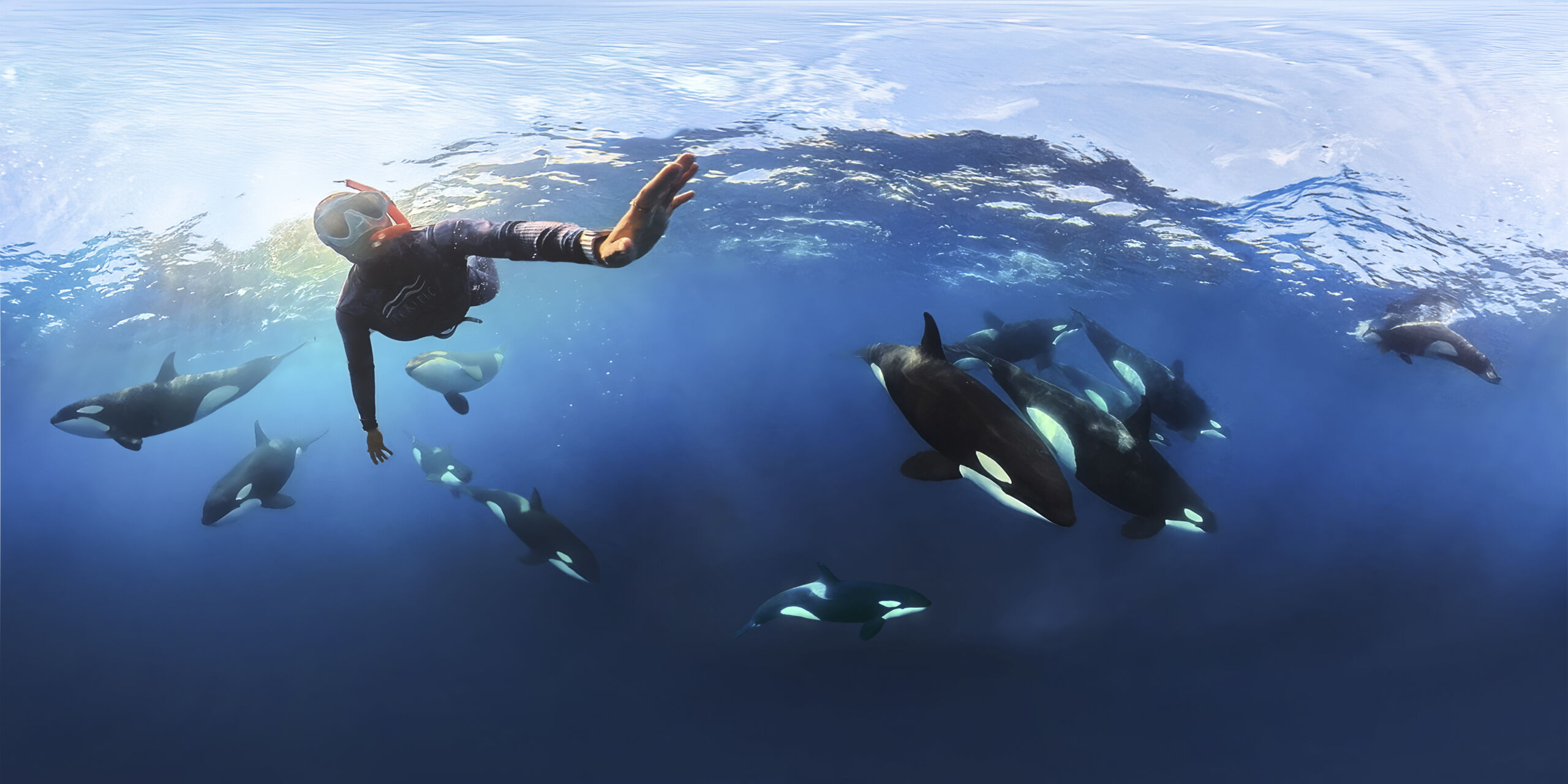
These are wild animals and nobody can promise them. In 2026 we logged 47 orca days, and 14 of our 16 weeks in 2025 found orca. Six full days is what buys you the odds.
From $6,500 USD
Per person, two people sharing a room, for seven nights and six sea days. Accommodation, meals and transfers included.
Seven to twelve hours
Long days, by design. If we are on orcas, we stay out. Be comfortable spending a full day on a boat.
May through August
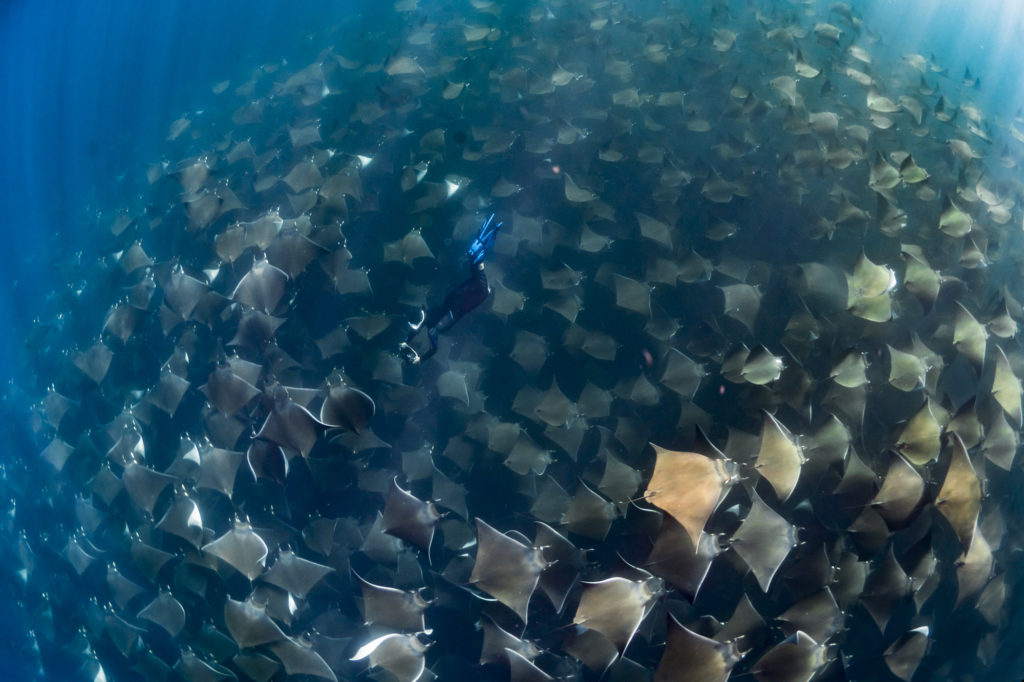
Orcas move through the whole season. Mobula rays peak in May and June, when they gather in the Cerralvo Channel in their thousands.
Mexico has not banned or suspended swimming with orcas. SEMARNAT’s one-year management plan reached the end date it was written with — in the off-season, exactly as designed. The framework is being renewed, not removed.
Operators ran successfully right through the period the headlines described as a shutdown. We logged 17 orca days in August 2026.Read the full explanation →
Why our odds are different
The honest answer to “can you find them?” is not a promise. It is logistics. Three things we do that other boats in this region do not — and three seasons of logged numbers showing what they produce.
We run dedicated offshore scouts, daily
One hull can only cover a narrow corridor. A scout network covers hundreds of square miles — reading bait balls, bird behaviour, wakes and blows, and talking to our captain in real time. Most operations here leave the dock and look for themselves.
We carry the fuel to act on what they find
A scout radioing a pod forty miles out is useless if you cannot reach it. We put 400+ litres aboard so that the only acceptable answer is “on our way”. That range is also what lets us work away from the crowd.
We stay out as long as the animals are there
The clock does not end our day. Seven to twelve hours is normal, and the only three things that turn us back are the light, the animals’ own behaviour, and the respect we owe them — never the hour, and never how far from the dock we have drifted. We do not work a small scout box close to shore either — we range across the channel and well beyond it, wherever the day’s reports point, because the ones worth swimming with are rarely the ones nearest the dock.
On 2 June that meant a single male at 8:30am, word of thirteen more over forty minutes out, a long run to reach them — and in the water with them until six. The last week of June 2024 produced six orca days out of seven.
None of this makes a guarantee possible. If a company is promising guaranteed orca swims, they are promising you something the ocean cannot deliver. What it makes possible is three seasons of numbers like the ones above — and you can check it yourself, day by day, rather than taking our word for it. How we find them → · Read the daily log →
Everything else
Tap a question to open it.
The trip
Where do these tours take place?
In La Ventana, on the Sea of Cortez in Baja California Sur, Mexico. We run long-range boats out into the Cerralvo Channel and beyond.
Jacques Cousteau called this body of water “the world’s aquarium”. It is the one place where blue whales, orcas and the densest mobula ray aggregations on earth all move through the same channel in the same season.
How long are we out at sea each day?
Typically seven to twelve hours, every one of the six sea days. We leave with the sunrise and follow the daily scout reports.
If we find orcas, we stay with them. That can mean a very long day, so come prepared to be comfortable on a boat for all of it — sunglasses, sunscreen, a hat and something warm for the run home.
What is included in the cost?
- Hot breakfast every morning
- Lunch and snacks on the boat
- Six sea days with air support
- Seven nights’ accommodation
- Ground transport from SJD or LAP
Not included: flights, travel insurance, tips for the crew, and your own snorkelling gear.
Will we definitely swim with orcas?
No operator can honestly promise that, and we will not. These are wild animals in a wild ocean.
What we offer instead is the best odds available: a team that does nothing but this, scouts covering hundreds of square miles daily, boats with the fuel range to reach distant sightings, and six full days to make it happen. In 2025, 14 of our 16 weeks found orca; in 2026 we logged 47 orca days between May and August. We publish the whole season day by day, misses included, so you can judge that for yourself.
When we are on a pod that is drawing a crowd, we will take some drops and then wait — often four or five hours — until the other boats thin out and we can get in properly.
How are your success rates different from other operators?
It comes down to three operational choices, and they are the reason you will not find another outfit running this way in the area.
- Dedicated offshore scouts, every single day. One boat sees a narrow corridor; a scout network covers hundreds of square miles and feeds our captain live.
- 400+ litres of fuel aboard. A sighting forty miles out is only useful if you can get there, so the only answer we give the radio is “on our way”.
- Long days, and second launches. We have come in at 2:30 and gone back out at 4:15 because the scouts called it in.
That produced 14 orca weeks out of 16 in 2025 and 47 orca days across the 2026 season — our strongest yet, with 18 in August alone. A typical week brings one to two orca days. Unlike most operators, we publish our entire daily log — the blank days as well as the good ones. See how we find them →
What else might we see?
A great deal. In 2025, 99% of our sea days produced sightings — not 99% of weeks, 99% of days. Across that season we logged 280+ encounters and 24+ species.
- Blue whales and fin whales — the two largest animals on earth
- Sperm whales, sometimes in numbers; we logged forty in one day
- Pilot whales in pods of 100 or more
- Mobula rays in their thousands, May and June
- Whale sharks past 35 feet, oceanic mantas, silky sharks, schooling hammerheads
- Dolphin superpods, mola mola, marlin, and the sea lion colony at La Reina
Has Mexico banned swimming with orcas?
No. SEMARNAT’s management plan reached its end date and is being renewed. The framework is between versions — it has not been withdrawn, and in-water encounters were taking place here well before that plan existed.
Operators ran successfully throughout the period the headlines described as a shutdown. We logged 17 orca days in August 2026.
We pushed for those rules in the first place and we want them back, stronger. Here is the full picture →
In the water
Do I need to be a scuba diver?
No — these are snorkel-only trips. There is no diving and no need for it.
You should be a good swimmer if you want to keep up with the animals. You do not need to be an athlete, but you should be comfortable swimming in fins and fit enough to climb the boat’s ladder unaided.
What gear should I bring?
You bring your own in-water gear. Everything else for the boat is up to you.
- Wetsuit or swimsuit — we wear a 3mm in May, and a full-body rash guard June to August
- Mask, snorkel and fins
- A boat jacket for the run out and back
- Sunglasses, sunscreen and a hat
- A camera — you will want one
Is there an age limit? Can I bring my kids?
To travel independently you must be at least 18. There is no upper age limit on most of our trips.
Children are welcome, and they should be strong swimmers — the same standard applies to everyone in the water.
Booking & money
How do I book a trip?
Online, through this website. Each accommodation page shows live availability for every departure, and the booking system handles the rest.
If you would rather talk it through first, or you want a whole boat for your own group, get in touch and we will hold a week for you.
What is your cancellation policy?
120 days or more before the trip: 20% of the trip cost, plus the deposit.
Less than 120 days: 100% cancellation fee.
Take travel insurance that covers cancellation, and take it when you book.
Is tipping included? How much should I budget?
Tips are not included in the trip price, and tipping is entirely at your discretion.
We generally suggest 10% to 20% of the trip cost. It goes directly to the crew, who do their absolute best to put you on the best encounters possible.
Can I book the whole boat, or bring a group?
Yes. With only five or six guests aboard, a small group fills a boat outright — and both accommodations are taken by one group at a time anyway.
Tell us what you have in mind and we will put something together.
Getting there & staying
Which airport do I fly into?
San José del Cabo (SJD). Pick-up on arrival Saturday is at 2:00pm, so book a flight that lands with enough time to clear customs beforehand.
Going home, book a departure after 12:00pm to allow for the transfer back. Ground transport from SJD or LAP is included either way.
Where will I be staying?
One of two beachfront bases in La Ventana, and you choose which when you book:
- Casa Ola — a private beach house for your group, with a private pool, private gym and air conditioning throughout
- Palacio — luxury beach apartments steps from the water, with a shared pool and hot tub
Every guest gets the same six days at sea with the same guides. The choice is only about where you come home to each evening.
When is the best time to come?
Our season runs May through August, Saturday to Saturday.
Orcas move through the whole season. Mobula rays aggregate in May and June in the densest gatherings of their kind anywhere on earth. The great whales are a spring speciality.
There is more detail on our best time to visit page.
Still have a question?
Ask it. We would rather answer honestly before you book than have you arrive expecting something different.